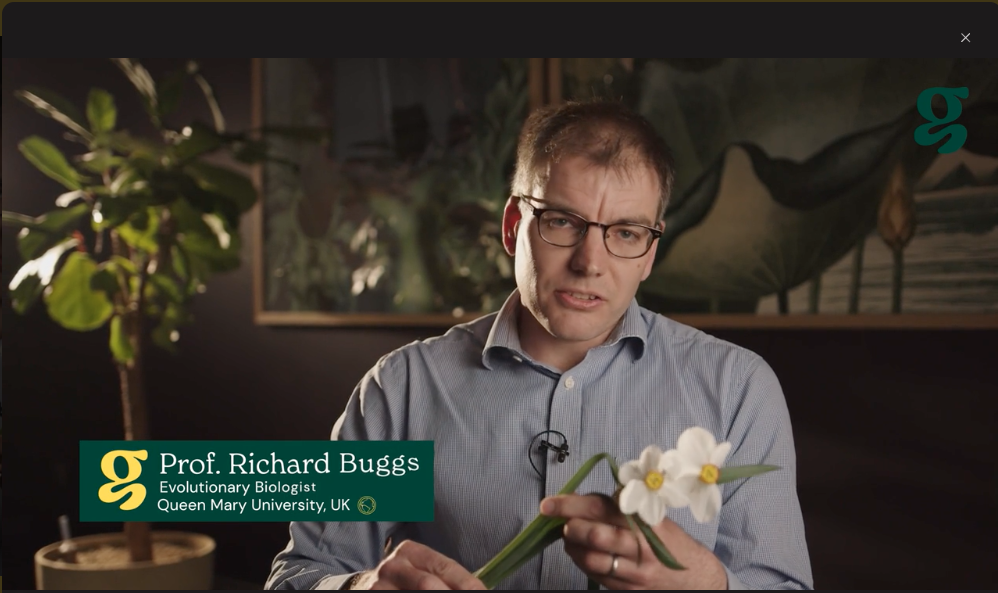
Yesterday, the journal Sciencepublished a study providing evidence that humans are descended from very small population. The authors detect a bottleneck lasting about 100,000 years with an average effective population size of about 1280. They date this to about 813,000 to 930,000 years ago, placing it before the divergence of Neandertals and Denisovans from modern humans. This coincides with a large gap in the hominin fossil record. They suggest it is the period in which the human chromosome number of 23 originated.
Such a bottleneck has not been detected before. Effective population sizes did not fall below 10,000 in previous genome analyses. The authors of the new study provide simulations to show that their software is better at detecting bottlenecks than older software.
A few years ago, I was involved in an extensive discussion with other Christian biologists on whether the (then current) estimates, which never dropped below 10,000, disproved the hypothesis that human descend from a single couple. Representatives of the organisation Biologos argued that they did. I argued that they did not, because the methods used were simply unable to detect short sharp bottlenecks. Eventually, a measure of consensus emerged. We agreed that genomics does not rule out a single couple as the sole progenitors of humans. The organisation Biologos adopted a new position on the issue: that Adam and Eve are only ruled out in the last 500,000 years but not before that.
The methods used in the study published in Science yesterday are similar to the older methods in that they also cannot detect short sharp bottlenecks. They rely on the assumption that the human population size was stable over time windows lasting many generations, in order to calculate an effective population size for that time window. Thus, a bottleneck of two is not ruled out by their methods. In some ways, the single-couple hypothesis becomes more plausible given the new evidence for a prolonged bottleneck with an average effective population size of about 1280.
The new study, and the discussion going on around it, are also helpful reminders that no studies estimating past effective population sizes should be taken as absolute truth. The authors begin their study by saying “ancient population size history of the genus Homo during the Pleistocene is still poorly known” and “a new approach is needed to improve the inference accuracy of population size history.” This was of course true in 2018, when I was previously discussing this issue with Christian biologist. But this caveat was not as clearly stated in the scientific literature at that time, which made it hard to persuade some layperson onlookers that caution was needed. It is an unfortunate feature of the scientific literature that publicly accessible critiques of methods are often only available once a new improved replacement is found.
Christians must be cautious about how they interact with studies exploring past human effective population sizes from genomes. Such methods are not able to either prove or disprove the hypothesis of Adam and Eve. But none-the-less it is fascinating to see the science appearing to move towards, and not away from, this hypothesis.
In gave my inaugural lecture as Professor of Evolutionary Genomics at Queen Mary University of London on 16th November 2022, the film of which can be viewed below.
Inaugural lectures are a chance to give a personal view on one’s research field, at a level that will be understood by the whole university and the general public.
My Vice-Principal asked me to be more personal than usual in this inaugural, speaking about my Christian faith as well as my research as a biologist.
I decided to do this by placing side-by-side “tree-of-life” concepts from the Bible and from The Origin of Species. By comparing and contrasting the evidence for these very different trees of life, I tried to help the audience understand how I think through things as both a biologist and a Christian.
Whether or not this worked, you can judge for yourself.
I have been a full professor at Queen Mary for over four years now, but there is a back-log of inaugural lectures, and many never happen at all. So it was a great privilege to be invited to give this.
Last week I published a short article in Molecular Ecologyon evidence for natural selection. It has proven difficult to show natural selection occurring in real time in wild populations. New approaches may help, and these are being pioneered in studies of Soay sheep. While commenting on these new approaches, I make several general points about the evidential case for natural selection.
Perhaps the more broadly interesting of these is a critique of the argument by analogy to natural selection. I suggest that, although widely used, the analogy has severe limitations. You can read this critique from the second to the seventh paragraph of my article, which is available open access here.
This video summarises my understanding of the current genetic evidence on whether or not humans could have passed through a bottleneck of a single couple at some point in our history.
It is a talk I gave in May 2020 for a group of scientists from across Europe who identify as Christians. This audience came from a range of different disciplines, so I tried to present at a level understandable to any educated layperson.
Everything I say here is preliminary and tentative. I welcome feedback and comments on this talk – especially from experts on human population genomics – especially if I say anything that is wrong. My box diagrams are of course simplifications, but I hope they convey the major concepts with clarity.
Since I gave this talk, a major paper has been published in Nature presenting high coverage genome sequences for populations across Africa. The key analyses mentioned in my video based on the 1000 genomes project need to be re-done on this new, much better dataset. I won’t have time to do that any time soon, but if someone else did, I would be delighted.
Christian viewers should not misunderstood me to be taking or recommending any particular scientific or exegetical position on a harmonisation between current science and the Bible. This talk has a much narrower focus than that. Much research has still to be done.
If you are interested in following the links I mention in the video, my slides can be downloaded as a PDF here.
Here is a 20 minute lockdown video I published on YouTube a few days ago. In it, I make one major point: it is as hard to be an atheist today as it was 2400 years ago. In fact, a little harder.
I have seen a few responses to this video by atheists since I put it up, but so far, none of these have addressed the major point I am making. I hope someone will soon.
The material in this video is similar to a blog I posted a year ago: “Did Darwin make atheism credible“. If you prefer text to video, please do take a look there.
Happy Darwin Day 2021! This blog is about Darwin’s thought in the final years of his life, written for the Nature Ecology and Evolution community and re-published here.
Back in 2012, The Natural History Museum of Milan invited me to give a talk for their Darwin Day symposium. Predictably for a botanist, I took the topic of Darwin’s “abominable mystery”. In 1879 Darwin famously wrote that “The rapid development as far as we can judge of all the higher plants within recent geological times is an abominable mystery.”
That invitation got me started on nine years’ of research on the historical background of Darwin’s famous epithet for the plant fossil record. In 2017 I published some preliminary findings in Nature Ecology and Evolution. I published more detailed just a few days ago in The American Journal of Botany, with a paper titled: “The origin of Darwin’s abominable mystery“.
This new paper majors on Darwin’s understanding of plant systematics and paleobotany in the late 1870s. I presented new evidence that for Darwin the ‘abominable mystery’ was about the sudden appearance of dicotyledonous fossils in the Cretaceous. This is different to today’s understanding that the abominable mystery applies to all angiosperms.
This work caught the attention of the BBC science correspondent Helen Briggs, who published a thought-provoking article that was translated into Portuguese, Spanish, Indonesian, Chinese, and Italian. The Times of London also picked up on the story.
Strangely enough, the issue of dicotyledons versus angiosperms was not the one that captured public attention.
Darwin’s forgotten opponent
It was a forgotten opponent of Darwin who gained the limelight. I stumbled upon him in the library of Kew Gardens, first as a citation in an 1888 textbook of paleobotany, and again soon after when a librarian emerged from the basement bearing a fragile pamphlet, printed in 1877: “Fossil Plants and their Testimony in Reference to the Doctrine of Evolution”.
The pamphlet was a reprint of two scientific lectures. One delivered in 1876 made a detailed case that the fossil record of plants does not fit with Darwinian evolution, and instead could be explained by divine intervention. Especially the sudden appearance of the dicots in the Cretaceous. The author was William Carruthers.
Could William Carruthers have contributed to making the plant fossil record an abomination to Darwin in 1879? The timing of his lecture seemed to make it likely, but could I make a direct link?
I could not see his lecture mentioned anywhere in Darwin’s writings. But I pieced together three pieces of evidence that Darwin had been aware of it.
Firstly, Carruthers’ 1876 lecture was reported at length in The Times immediately after he gave it, and Darwin was in the habit of reading The Times after lunch everyday. Darwin would hardly have missed a long article with the headline “Plant Evolution”.
Together, these make a strong case that Darwin was aware of Carruthers’ view, and the wide publicity it gained.
Uncomfortably for Darwin, William Carruthers was more qualified to speak about the plant fossil record than he was. Carruthers was the Keeper of Botany at the British Museum (Natural History) and had published many papers on paleobotany. Like Darwin, he was a Fellow of the Royal Society.
To add piquancy, Carruthers was already out of favour with Darwin’s circle of friends. He had twice stymied their attempts to move herbarium collections from the British Museum to Kew. In 1874, Joseph Hooker described Carruthers to Darwin as an “Owenised Scotchman”, in reference to Darwin’s arch-enemy Richard Owen, a close colleague of Carruthers.
This was not someone whom Darwin wanted to enter into a debate with, in an area where he had no ready answers.
So Darwin’s term “abominable mystery” isn’t just about his perplexity with the plant fossil record. It also about his discomforting by his opponents.
Do I blame journalists for passing over the technical detail of my paper to focus on this side of the story? I can’t say I do. I find it pretty interesting too.
Imagine that my wife and I walk into our living room one morning to find that our son’s toy box has fallen over, and pieces of BRIO train set track lie jumbled on the floor. But eight of the pieces are joined together in a perfect circle, lying on the floor, with a train on top of the tracks. My wife asks me: “Did you make that railway?” I say “No – it must have been you”. She says it wasn’t her. We look at each other for a moment, thinking and then we come to two different conclusions.
My wife is worried and says: “Someone must have come into the flat last night. Railways don’t just spontaneously appear from a jumble of fallen pieces. We need to check my jewellery is still there.”
I shake my head and say “This is evidence that there are billions more BRIO sets in the world than anyone has realised. I am going to call a stockbroker and buy some shares in BRIO PLC.”
“Are you crazy?” my wife asks.
“No,” I say. “What do you think the chances are that these pieces could have just fallen like that, and the train fallen on top of them? One in a billion? One in a trillion?”
She says: “Maybe one in a trillion – it just couldn’t have happened by chance.”
I reply: “Yes it could, if there are billions of BRIO train sets in the world that keep being tossed onto the floor. Ours just happens to be the lucky one that has spontaneously formed a perfect circle, with a train placed on top. I had never realised that BRIO train sets are so common. I don’t think anyone had. But here is evidence. There are billions of them.”
My wife would think I was mad. Instead of the obvious explanation of an intelligent agent who has put the railway tracks together, I am invoking pure chance, justified by an outrageous speculation about billions of train sets.
Arguments in ancient Greece
This problem of explaining the origin of complex, purposeful structures by chance rather than by the action of a mind is a problem faced by atheists. In the natural world there are many structures that have multiple parts working together to make higher-order structures that have a purpose. These provide evidence of the work of an intelligent mind. The first philosophers to make arguments favourable to atheism – Leucippus, Democritus and Epicurus, living over 2000 years ago in Greece – were aware of this problem.
The argument for an intelligent mind was made eloquently and persuasively by other Greek philosophers like Socrates and Plato. They drew an analogy between the natural world and human craftsmanship. Look at a statue. No one could deny that a statue is the work of an intelligent mind. How much more is the human body, of which the statue is just a simple representation, the work of an intelligent mind. There must be a supremely intelligent mind behind the natural world around us, and this is the mind of God.
This analogy has been pervasive throughout human history. Hundreds of years later, Jesus Christ said: “Consider the lilies, how they grow: they neither toil nor spin, yet I tell you, even Solomon in all his glory was not arrayed like one of these.” Luke 12:27. He assumed it would be obvious to his listeners that flowering plants displayed more intelligent care than the royal robes of the King of Israel when his kingdom was at peak of cultural innovation. Jesus was making the same analogy between human craftsmanship and the natural world.
All that early proto-atheists like Democritus and Epicurus could say in response to this argument for a mind was that complex, purposeful things in the natural world had just come about by chance. These were just lucky assemblages of atoms. To try to justify this, they said that the universe must be infinitely large and infinitely old, and that there are trillions of worlds within it. We just happen to be the lucky people who are on the stupendously lucky world on which things have happened to come together in such a way that complex life can exist.
Not many people found this a persuasive argument. Even the staunch atheist Richard Dawkins concedes that arguments for atheism in the ancient world were not compelling. “I could not imagine being an atheist at any time before 1859 when Darwin’s Origin of Species was published” he wrote in The Blind Watchmaker.
The case made by Democritus and Epicurus is as ridiculous as my inference of billions of BRIO train sets from the unexpected occurrence of a completed railway in my living room. Needing so much luck to explain the world, atheism did not take off.
This left Socrates argument for design as one of the strongest arguments available to theists down through the centuries. The solar system, the world, the complex life forms on earth – none of these could have happened just by chance. We need the mind of God to explain their design and existence.
As human technology has got more sophisticated over the ages, and we have discovered more about the natural world, analogies have constantly been drawn between the latest human technology and the natural world. The Roman Stoics compared Archimedes’ astronomical mechanism to the workings of the actual stars and planets. William Paley in 18th Century England compared a pocket watch to living things. Today we can compare the latest nanotechnology with the vastly more complex and efficient molecular machines found in every living cell. Or painstakingly written computer programmes with the information encoded in our DNA. The analogy between human craftsmanship and the natural world has cascaded down through the ages, gathering force with technological and scientific progress. It is a persuasive argument for the existence of God.
Darwin according to Dawkins
This argument was fatally undermined when Darwin published The Origin of Species according to atheists like Richard Dawkins. “Darwin made it possible to be an intellectually fulfilled atheist” he claims in The Blind Watchmaker. According to Dawkins, Darwinian natural selection can explain complex life forms without the need to invoke massive strokes of luck; without needing hugely improbably things to happen; without one-in-a-trillion events.
How does it work? Let’s go back to our BRIO analogy. Imagine that instead of just being tipped on the floor once, my sons BRIO set kept being rejumbled every five minutes. Every five minutes there would be a fresh opportunity for bits of track to be joined together by chance. This is a bit like what happens in living things that reproduce. In every new generation there is a new opportunity for new variation.
Now imagine that as well as this rejumbling of the BRIO every five minutes, there is also a rule in place that any bits of track that get joined together do not get rejumbled. They stay as they are. So as soon as two bits are together they stay together. They can wait until by chance a third bit gets added. Then the three bits can wait, and eventually a fourth bit by chance may get added. Eventually the full circle may form, and a train be dumped on top of it. The railway has evolved by a gradual process of cumulative selection.
Step-by-step assembly of a trainset
If you have a system set up like that, then the production of a functional train set does not seem so unlikely. It is a series of unlikely events, but that series does not seen half as unlikely as the spontaneous assembly of the full circle and train in one go. A lot of luck is still involved but not as much as before.
This is the way that Dawkins tries to explain the origin of highly complex things by Darwinian evolution. It relies on small changes that are each selected for, because they provide greater fitness. Gradually they build up something more complicated. It all sounds plausible.
In The Blind Watchmaker, Dawkins suggests that this process could generate something as complex as a human eye. He suggests that an organism could start off with a small light sensitive spot its skin, and gradually over millions of generations this could sink into a little cup in the skin, enabling better assessment of direction. Then it could be enclosed enough to be a pinhole camera. Then it could gain a lens, etcetera etcetera. Painted in broad brush strokes, it all sounds plausible.
But the question we have to ask ourselves is: does this process eliminate enough luck from the origin of the natural world as we know it today for atheism to be credible?
Chance in evolution
In his book The God Delusion Dawkins writes about the Darwinian mechanism of evolution as if it only relies on chance in a very small way. He claims things like this: “Natural selection is a cumulative process which breaks the problem of improbability up into small pieces. Each of the small pieces is slightly improbable, but not prohibitively so” (p. 121, emphasis added). “Natural selection is not only a parsimonious, plausible and elegant solution; it is the only workable alternative to chance that has been suggested” (p. 120, emphasis added). He says that only “somebody who doesn’t understand the first thing about natural selection” would call it a “theory of chance”. He says it is the “opposite”.
I should point out that Dawkins seems to be indulging in a little equivocation here. In one sense what he is saying is absolutely right: natural selection, when narrowly defined, is the opposite of chance. In biology research we often speak of evolution occurring via five forces: natural selection, drift, recombination, migration and mutation. In the context of these five forces, natural selection is the one that is non-random. So as a research biologist, if I superficially read Dawkins’ statements above, I can nod my head and agree.
However, in the context of his book, Dawkins is using “natural selection” in a much wider, more colloquial sense, meaning the whole of the process of the evolutionary process. Used in that sense, it is quite wrong to say it is the “opposite” of chance. In fact, chance is an unavoidable component.
At this point, I could go into a lot of detail about the process of Darwinian evolution, giving you lots of instances where it requires huge injections of luck.
I could write about how evolutionary pathways can get trapped at local fitness peaks that are not global fitness peaks, and can only escape them by random drift. For example, if my BRIO train set had a circle made of eight pieces, which my toy train could happily rotate around, how could I get from that to a more complex train set? I would have to break the circle and insert a junction. I would have to go downhill from a local fitness peak in order to be able to climb a different fitness peak represented by a longer, more sophisticated railway.
To get from the train set on the left to the one on the right, I have to break the circle. Without this backward step, the track cannot progress to greater complexity.
I could write about evolutionary steps that need more than one concurrent mutation to work. To get two mutations in place at the same time that are both required before fitness is increased takes a big stroke of luck.
I could write about new beneficial mutations that simply get unlucky and are eliminated from the population by random drift.
I could write about how some new structures are very likely to need multiple part to come into place at the same time before they can function, and therefore require a lot of luck. For example, what if I had a system where I had to have a circular train set before the assemblage of pieces was selected for? It would take a lot of luck to build the train set. Given the complexity of the molecular machinery of life, it seems hard to imagine that such structures do not exist in biology. (Surprisingly, Dawkins is vehemently opposed to even looking for such things: “searching for particular examples of irreducible complexity is a fundamentally unscientific way to proceed,” he writes in The God Delusion (p. 125). That makes him sound less like a scientist and more like someone views his beliefs as sacrosanct from testing.)
In short, it is very well known to biologists working in the field (and, no doubt, to Dawkins himself) that chance is a very important element in the evolutionary process. But if you read The God Delusion as a non-biologist, you are likely to come away with the impression that it hardly involves any luck at all.
Dawkins’ own invocation of luck
But in reality, I don’t need to make those points. I can grant Dawkins everything he claims for the evolutionary process, and still show from his own admissions that he can’t get away from needing astronomical doses of pure luck to explain how we got here. Atheism has not got away from its problem of an implausible reliance on luck.
Here is a page from Dawkins’ book The God Delusion:
We really need Darwin’s powerful crane to account for the diversity of life on Earth and especially the powerful illusion of design. The origin of life, by contrast, lies outside the reach of that crane, because natural selection cannot proceed without it. Here the anthropic principle comes into its own. We can deal with the unique origin of life by postulating a very large number of planetary opportunities. Once that initial stroke of luck has been granted – and the anthropic principle most decisively grants it to us – natural selection takes over: and natural selection is emphatically not a matter of luck.
Nevertheless, it may be that the origin of life is not the only major gap in the evolutionary story that is bridged by sheer luck, anthropically justified. For example, my colleague Mark Ridley…has suggested that the origin of the eukaryotic cell (our kind of cell with a nucleus and various other complicated features such as mitochondria, which are not present in bacteria) was an even more momentous, difficult and statistically improbable step than the origin of life. The origin of consciousness might be another major gap whose bridging was in the same order of improbability. One-off events like this might be explained by the anthropic principle, along the following lines. There are billions of planets that have developed life at the level of bacteria, but only a fraction of these lifeforms ever made it across the gap to something like the eukaryotic cell. And of these yet smaller fraction managed to cross the later Rubicon to consciousness. If both of these are one-off events, we are not dealing with a ubiquitous and all pervasive process, as we are with ordinary run-of-the-mill biological adaptation. The anthropic principle states that since we are alive, eukaryotic and conscious, our planet has to be one of the intensely rare planets that has bridged all three gaps.
Natural selection works because it is a cumulative one-way street to improvement. It needs some luck to get it started, and the ‘billions of planets’ anthropic principle grants it that luck. Maybe a few later gaps in the evolutionary story also need major infusions of luck, with anthropic justification.
Richard Dawkins (2006) The God Delusion page 140 (emphasis added)
Here, despite his repeated claim that “natural selection is emphatically not a matter of luck”, Dawkins is still reduced to invoking huge amounts of luck to explain how we got here. He is making the same argument as Democritus and Epicurus: he needs so much luck that he has to invoke billions of worlds. He has to posit billions of planets that are potentially habitable by conscious life forms.
Dawkins’ argument is weaker than that of Democritus and Epicurus. They claimed that the universe is infinite in terms of both space and time. But Dawkins knows that the universe has a beginning, so he does not have infinite time to work with. He also knows that it is not infinite in size. This dramatically reduces the probabilistic resources available to him within this universe compared to what Democritus and Epicurus thought they had.
If you read further in The God Delusion, Dawkins also finds himself not just having to invoke billions of habitable planets, but also billions of universes too, to explain why the physical constants of our universe are so fine-tuned for life. Though there is no empirical evidence for multiple universes, it is all Dawkins has to fall back on to give himself the huge amount of luck that he needs to explain reality.
Conclusion
Even if we grant Darwinian evolution all the power for eliminating luck that Dawkins claims for it, atheism is still a huge leap of faith in blind chance. Despite writing: “I could not imagine being an atheist at any time before 1859 when Darwin’s Origin of Species was published”, Dawkins finds himself falling back on arguments made by Democritus and Epicurus in ancient Greece. Dawkins’ ultimate reliance on these ancient invocations of luck undermines his case that Darwin made atheism credible.
Like the ancients, we are still left with a choice between huge amounts of luck, or a divine mind behind the universe and life.